
If you are wondering how to choose the right diaper for your baby, it is important to consider comfort, absorbency, fit and skin sensitivity. With so many options available, parents may find it difficult to decide which diaper offers the right balance of protection, convenience and cost.
Every baby is different. A diaper that works well for one baby may not suit another, so it is worth paying attention to your baby’s size, skin sensitivity and individual needs rather than choosing a product based on its brand name alone.
In this guide, we will explore the different types of baby diapers, how to choose the correct size, what to look for in terms of absorbency and comfort, and how disposable diapers compare with reusable alternatives. We will also discuss common purchasing mistakes and answer frequently asked questions to help you make a more informed decision.
Whether you are preparing for your newborn or looking for a better option as your baby grows, this guide will help you understand the key factors to consider before buying diapers.
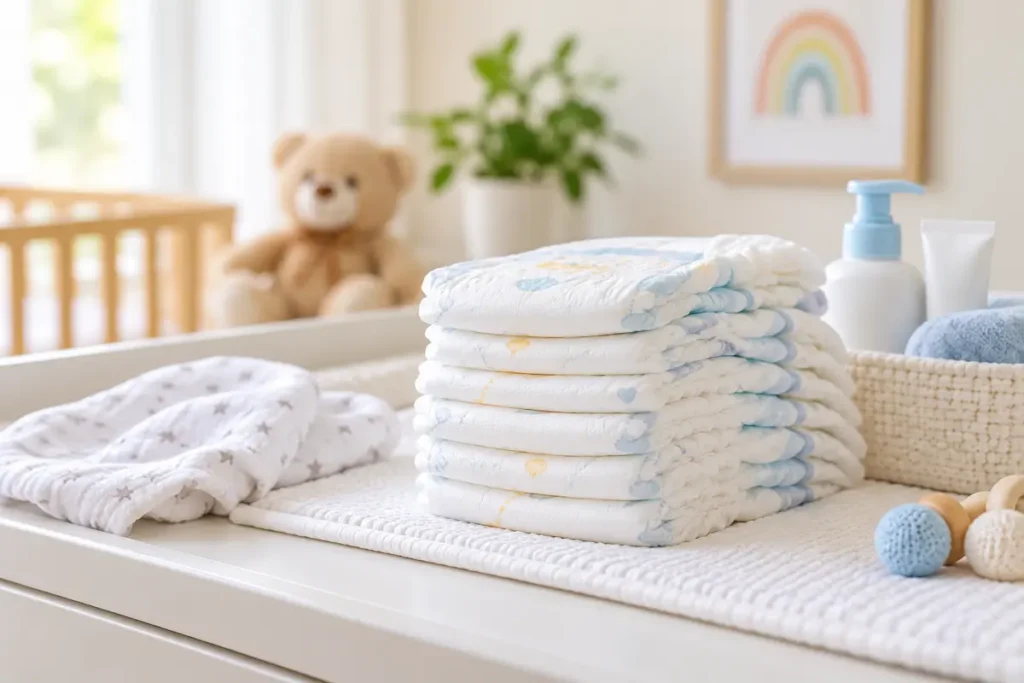
1. Types of Baby Diapers
Baby diapers are available in several styles to suit different ages, stages of development and family preferences. Understanding the main types can help you choose an option that is practical for your baby and your daily routine.
1.1 Tape-Style Diapers
Tape-style diapers have fastening tabs on both sides and are wrapped around the baby’s waist. They are particularly convenient for newborns and younger babies who spend much of their time lying down.
What to consider:
- Adjustable tabs can help you achieve a comfortable fit around the waist.
- They are convenient for changing a baby on a changing mat.
- The diaper should fit securely around the waist and thighs without digging into the skin.
- Check the fastening tabs regularly to ensure they remain secure.
1.2 Pant-Style Diapers
Pant-style diapers have an elastic waistband and are pulled on like underwear. They can be useful for older babies who move, roll or crawl frequently, and for toddlers who are becoming more active.
What to consider:
- The pull-on design can make changes easier when a baby is active.
- An elastic waistband should fit comfortably without leaving deep marks.
- Check that the leg openings provide a secure fit to help reduce leakage.
- Choose a style that is easy to remove during changes.
Pant-style diapers are not limited to babies who can stand or walk; suitability depends on the baby’s size, the product’s instructions and the caregiver’s preference.
1.3 Reusable Cloth Diapers
Reusable cloth diapers are designed to be washed and used repeatedly. Depending on the design, they may include absorbent inserts, adjustable fasteners or a waterproof outer layer.
What to consider:
- They can reduce the need to buy disposable diapers repeatedly.
- They require regular washing, drying and proper storage.
- You may need several diapers and extra inserts to manage changes throughout the day.
- Check the washing instructions and ensure the diaper is thoroughly cleaned and dried before reuse.
1.4 Swim Diapers
Swim diapers are specially designed for use in swimming pools or other suitable water settings. They are intended to contain solid waste, but they generally do not absorb urine like ordinary diapers.
What to consider:
- Select the correct size and follow the manufacturer’s instructions.
- Change the diaper promptly after swimming.
- Do not use a swim diaper as a substitute for an everyday diaper.
- Follow the swimming facility’s hygiene requirements.
Which Type Should You Choose?
There is no single diaper type that is best for every baby. Tape-style diapers may be convenient for younger babies, pant-style diapers can suit active babies, and reusable cloth diapers may appeal to families comfortable with regular washing.
Consider your baby’s fit and comfort, your changing routine, laundry facilities, budget and the product’s instructions before deciding. Regardless of the type you choose, change diapers regularly and check your baby’s skin for signs of irritation.
2. How to Choose the Right Diaper for Your Baby: Size and Fit
Choosing the correct diaper size is essential for your baby’s comfort and helps reduce the chances of leakage. A diaper that is too tight may cause discomfort and leave marks on the skin, while one that is too loose may not contain wetness or mess effectively.
Diaper sizes vary by brand and product type, so always check the manufacturer’s size chart rather than relying on your baby’s age alone.
2.1 Check Your Baby’s Weight
Most diaper manufacturers recommend sizes according to a baby’s weight range. Weigh your baby periodically and compare the result with the size guide on the packaging.
If your baby is near the upper limit of a size, check the fit carefully and consider whether the next size would be more suitable. Do not automatically size up if the current diaper fits well and works as intended.
2.2 Look for a Comfortable Waist Fit
A properly fitted diaper should sit comfortably around your baby’s waist without digging into the skin.
For tape-style diapers, fasten the tabs securely but avoid pulling them too tightly. For pant-style diapers, check that the waistband sits comfortably and does not roll excessively or leave deep marks.
2.3 Check the Leg Openings
The diaper should fit snugly around the thighs without pinching the skin. For diapers with inner leg cuffs, gently pull the cuffs outward after putting the diaper on, following the manufacturer’s instructions.
Gaps around the legs may contribute to leakage, while openings that are too tight can cause discomfort.
2.4 Recognise Signs That the Size May Be Wrong
Consider checking the size or fit if you notice:
- Frequent leaks despite changing the diaper appropriately.
- Fastening tabs that are difficult to close or do not stay secure.
- Deep or persistent marks around the waist or thighs.
- The diaper sitting too low or failing to cover the baby’s bottom adequately.
- Frequent gaps around the legs.
These signs do not always mean you need a larger size. Check the diaper’s position, fastening and product instructions first.
2.5 Recheck the Fit as Your Baby Grows
Babies grow quickly, and a size that fitted comfortably a few weeks ago may no longer be suitable. Recheck the fit regularly, particularly when you notice repeated leaks or changes in how the diaper sits.
Parent tip: A good fit should be secure without being restrictive. Your baby’s comfort, the manufacturer’s size guide and how well the diaper performs are more useful than choosing a size based on age alone.
3. Absorbency, Comfort and Skin Sensitivity
A good diaper should absorb wetness effectively, fit comfortably and be suitable for your baby’s skin. However, no single diaper works equally well for every baby. Consider how the product performs during your daily routine and observe how your baby’s skin responds.
3.1 Understand Diaper Absorbency
Absorbency refers to how well a diaper takes in and retains moisture. The level of absorbency you need may depend on your baby’s age, how often the diaper is changed and the situation in which it is used.
When comparing diapers, consider:
- Moisture retention: Does the diaper manage wetness effectively during normal use?
- Leak protection: Does it fit properly around the waist and legs?
- Changing frequency: Can you change it regularly according to your baby’s needs and the manufacturer’s instructions?
- Day and night use: Consider whether a product is specifically designed for extended or overnight use, but never rely on absorbency as a reason to delay a needed diaper change.
Even a highly absorbent diaper should be changed promptly after a bowel movement and whenever necessary to keep your baby clean and comfortable.
For further guidance on preventing diaper rash, read the American Academy of Pediatrics’ article, Why is my baby always getting diaper rashes?, which explains the importance of frequent diaper changes and other contributing factors.
3.2 Prioritise Comfort
Babies move, stretch, crawl and sleep in different positions throughout the day. A comfortable diaper should allow normal movement without excessive tightness or bunching.
Look for a flexible fit, a waistband that does not dig into the skin and leg openings that sit comfortably. Soft materials may also be worth considering, although softness alone does not guarantee that a product will suit every baby.
Check the diaper periodically to make sure it remains correctly positioned, particularly after your baby has been active.
3.3 Consider Skin Sensitivity
Some babies may develop redness or irritation in the diaper area. Possible contributing factors include prolonged contact with moisture or stool, friction, and sensitivity to particular ingredients or materials.
If your baby has sensitive skin, you may wish to consider:
- Fragrance-free products, especially if fragrances appear to irritate your baby’s skin.
- A fit that minimises rubbing and friction.
- Regular diaper changes and gentle cleaning.
- Allowing the skin to dry before putting on a fresh diaper.
- Following the advice of your baby’s healthcare professional if irritation continues.
No diaper can guarantee that rashes will never occur. If a rash is severe, persistent, worsening or accompanied by other concerning symptoms, seek advice from a healthcare professional.
3.4 When Should You Change a Diaper?
Check your baby’s diaper regularly and change it promptly when it is wet or soiled. Change bowel-soiled diapers as soon as possible, and follow the manufacturer’s guidance for the product you use.
Newborns may need frequent changes because they urinate and pass stools often. As babies grow, their routines may change, but regular checks remain important.
Parent tip: When trying a new diaper, observe its fit, leakage performance and your baby’s skin over several changes. This can help you decide whether it suits your family’s needs.
4. Disposable vs Reusable Diapers: Pros, Cons and Costs
One of the main decisions parents face is whether to use disposable diapers, reusable cloth diapers or a combination of both. Each option has advantages and practical considerations. The right choice depends on your budget, daily routine, laundry facilities and personal preferences.
4.1 Disposable Diapers
Disposable diapers are designed for single use and are discarded after use. They are widely available in different sizes and styles, including tape-style and pant-style options.
Advantages:
- Convenient for busy routines, outings and travel.
- No routine washing or drying is required.
- Available in a range of sizes and product features.
- Used diapers can be disposed of without adding to the household laundry.
Things to consider:
- Buying diapers repeatedly can add up to a significant ongoing expense.
- Used diapers create household waste.
- Different products vary in fit, absorbency, materials and price.
- You need to maintain a suitable supply to avoid running out.
4.2 Reusable Cloth Diapers
Reusable cloth diapers are washed after use and worn again. Depending on the design, they may use absorbent inserts, adjustable fasteners and a waterproof outer layer.
Advantages:
- The same diaper can be used repeatedly when properly cared for.
- They may reduce the amount of disposable diaper waste.
- Some designs allow inserts to be replaced or adjusted as needed.
- They may offer savings over time for families who manage washing efficiently.
Things to consider:
- An initial collection of diapers and inserts is needed.
- Washing, drying and storage require time and planning.
- Water, electricity, detergent and laundry costs should be included in the budget.
- You need enough clean diapers available between washes.
4.3 Comparing the Long-Term Costs
Disposable diapers usually involve recurring purchases, while reusable diapers generally require a larger initial investment followed by ongoing laundry and maintenance costs.
To compare them fairly, consider the total cost over the period you expect to use diapers.
For disposable diapers, estimate the number used per day, the price per diaper and the number of days.
For reusable diapers, include the purchase price of the diapers and inserts, laundry expenses, detergent, and any replacement items required over time.
The actual cost difference varies with local prices, the number of changes needed, washing habits and how long the diapers are used. Neither option is automatically cheaper for every household.
4.4 Which Option Is Right for Your Family?
Disposable diapers may suit families who prioritise convenience or have limited access to laundry facilities. Reusable cloth diapers may suit families who are comfortable with regular washing and want to reduce reliance on single-use products.
Some families use a combination—for example, cloth diapers at home and disposables when travelling. This can offer flexibility, provided each diaper is used and cared for according to its instructions.
Parent tip: Choose the option you can use consistently while keeping your baby clean, comfortable and dry. Your family’s practical needs matter more than following a particular trend.
5. Features and Costs to Compare Before Purchasing
Once you understand the different diaper types, the next step is to compare individual products. Packaging and advertising can make many diapers appear similar, but prices, sizing, materials and practical features may differ.
Rather than choosing a diaper based on brand name or promotional claims alone, consider the following factors.
5.1 Compare the Price per Diaper
The price of a pack does not always tell you which option offers better value. Packs may contain different numbers of diapers, so calculate the cost per diaper before comparing them.
Simple formula:
Price per diaper = Total pack price ÷ Number of diapers in the pack
For example, if a pack costs ₹600 and contains 60 diapers, the cost is ₹10 per diaper. If another pack costs ₹450 and contains 36 diapers, the cost is ₹12.50 per diaper.
These are illustrative figures, not current product prices. Always check the actual pack price and quantity before purchasing.
Remember that a lower price per diaper does not necessarily mean better value if the fit is unsuitable or the product does not meet your baby’s needs.
5.2 Check the Size Range
Look at the manufacturer’s weight guide and choose a size that fits your baby comfortably. Compare the available sizes before buying a large pack, especially if your baby is growing quickly or is close to moving to the next size.
5.3 Consider Absorbency and Leak Protection
Check the product description for its intended use and absorbency features. Consider whether the diaper performs well during your usual changing routine and whether its shape provides a suitable fit around the waist and thighs.
Do not rely solely on claims such as “super absorbent” or “overnight protection.” Your baby’s comfort and the need for regular changes remain important.
5.4 Review Materials and Product Information
Read the packaging and manufacturer’s information to understand the materials used, care instructions and any stated fragrance or ingredient information.
If your baby has known skin sensitivities, consider whether the product is suitable and consult a healthcare professional if you need advice about a particular ingredient or recurring irritation.
Avoid assuming that a product is completely chemical-free, allergy-proof or guaranteed to prevent rashes unless reliable evidence supports the specific claim.
5.5 Look for Practical Features
Depending on the diaper type, useful features may include:
- Adjustable fastening tabs.
- A flexible waistband.
- Comfortable leg cuffs.
- A wetness indicator, if available.
- Easy-to-remove pant-style construction.
- Clear sizing and usage instructions.
Not every baby needs every feature. Prioritise the features that make diaper changes easier and help the product fit your baby well.
5.6 Read Product Reviews Carefully
Customer reviews may help you identify recurring comments about sizing, leakage, comfort, packaging or value for money.
However, one person’s experience may not match yours. Look for patterns across multiple recent reviews, and consider whether the reviewer used the same size and product variant you are considering.
Check the product details, pack quantity and seller information before placing an order.
5.7 Check the Total Cost of Regular Use
Estimate how many diapers your baby typically uses each day, then calculate the approximate daily and monthly cost.
For example:
Estimated daily cost = Number of diapers used per day × Price per diaper
Your actual spending will depend on your baby’s needs, age, changing routine and the product you choose. For reusable diapers, include laundry and maintenance costs as well.
Parent tip: Compare fit, comfort, practical features and price together. The most expensive diaper is not necessarily the best choice, and the cheapest option may not offer the best value for your family.
6. Common Mistakes Parents Should Avoid
Choosing a diaper becomes easier when you know what to look for—and what to avoid. Here are some common mistakes that can lead to unnecessary expense, discomfort or leakage.
6.1 Choosing a Size Based Only on Age
Babies grow at different rates, so age alone is not a reliable way to select a diaper size. Always check the manufacturer’s weight guide and assess how the diaper fits around your baby’s waist and legs.
6.2 Buying Large Packs Before Testing the Fit
Buying a large pack may seem economical, but the diaper might not fit your baby comfortably. If you are trying a new brand or style, consider starting with a smaller pack before purchasing in bulk.
6.3 Ignoring Repeated Leaks
Occasional leaks can happen, but frequent leakage may indicate that the diaper is incorrectly positioned, the size is unsuitable, or the product does not suit your baby’s needs.
Check the fastening, leg cuffs and size guide before deciding whether to change products.
6.4 Leaving a Wet or Soiled Diaper On for Too Long
Delaying diaper changes can increase your baby’s exposure to moisture and stool, which may contribute to skin irritation. Check the diaper regularly and change it promptly when wet or soiled.
6.5 Choosing Only by Price or Brand Name
A familiar brand or a low price does not automatically mean a diaper will be the best fit for your baby. Compare the size, comfort, absorbency, pack quantity and price per diaper before making a decision.
6.6 Overlooking Product Instructions
Different diapers have different sizing guides, fastening methods and usage instructions. Read the packaging carefully, especially when trying a new product or moving to another size.
6.7 Assuming Every Diaper Suits Every Baby
Babies differ in body shape, activity level and skin sensitivity. If one product repeatedly causes fit problems or appears to irritate your baby’s skin, consider an alternative and seek professional advice when needed.
6.8 Relying Entirely on Online Reviews
Reviews can provide useful information, but individual experiences vary. Look for recurring feedback across several reviews and confirm that the comments relate to the same product and size.
Parent tip: Observe how a diaper fits and performs during everyday use. A few careful checks can help you avoid unnecessary purchases and make a more informed choice.
7. Frequently Asked Questions About Baby Diapers
7.1 How do I know which diaper size is right for my baby?
Start with the manufacturer’s weight guide and check how the diaper fits around your baby’s waist and thighs. It should feel secure without pinching or leaving deep marks. If leaks occur frequently or the diaper becomes difficult to fasten, reassess the fit and size.
7.2 How often should I change my baby’s diaper?
Check your baby’s diaper regularly and change it promptly when wet or soiled. Change bowel-soiled diapers as soon as possible. Newborns often need frequent changes, and individual needs vary with age, feeding and routine.
7.3 Are pant-style diapers better than tape-style diapers?
Neither style is best for every baby. Tape-style diapers can be convenient when changing a younger baby who is lying down, while pant-style diapers may be easier to pull on when a baby is active. Choose based on fit, comfort and your changing routine.
7.4 Are reusable cloth diapers cheaper than disposable diapers?
They may cost less over time for some families, but the result depends on the initial purchase, number of diapers needed, washing costs, replacement items and how long they are used. Compare the total cost rather than the purchase price alone.
7.5 Can a diaper cause skin irritation?
Skin irritation can have several causes, including prolonged contact with moisture or stool, friction and sensitivity to certain materials or ingredients. Change diapers regularly, clean the area gently and allow the skin to dry. Consult a healthcare professional if a rash is severe, persistent or worsening.
7.6 Should I buy a large pack of diapers to save money?
A large pack may offer a lower price per diaper, but it is sensible to check the fit before buying in bulk, especially when trying a new brand or size. Babies grow quickly, and a previously suitable size may soon become too small.
7.7 Are overnight diapers necessary?
Not every baby needs a product specifically marketed for overnight use. Consider your baby’s needs and the manufacturer’s instructions. Check diapers regularly and change them when needed; do not delay a necessary change simply because a product is labelled for overnight use.
7.8 Can I use the same diaper brand as my friend’s baby?
You can try the same brand, but the fit and performance may differ between babies. Consider your baby’s weight, body shape, comfort and skin response before deciding whether the product is suitable.
7.9 What should I consider when choosing a diaper for sensitive skin?
Look for a comfortable fit, minimise friction and consider fragrance-free options if fragrances appear to cause irritation. No product can guarantee that a rash will never occur. Seek professional advice if you have ongoing concerns about your baby’s skin.
7.10 What is the most important factor when choosing a baby diaper?
There is no single factor that applies to every baby. A comfortable fit, suitable absorbency, regular changing, skin comfort and reasonable cost should all be considered together. Choose a product that meets your baby’s needs and works for your family’s routine.
8. Final Thoughts on How to Choose the Right Diaper for Your Baby
Choosing the right diaper is about finding a suitable balance between fit, absorbency, comfort, skin sensitivity and cost. A product that works well for one baby may not be the best choice for another, so pay attention to your baby’s needs and follow the manufacturer’s guidance.
Before purchasing, compare the size chart, pack quantity, price per diaper and product features. If you are trying a new brand or style, consider starting with a smaller pack to check the fit and performance before buying in bulk.
Most importantly, change diapers regularly, keep your baby’s skin clean and dry, and seek professional advice if you have concerns about persistent irritation.
Explore Our Diapering Guide
Looking for more information about diapering essentials? Visit our Diapering page to explore the category and discover useful information for choosing baby-care products.
We hope this guide helps you make a confident, informed decision for your little one.