
When comparing disposable vs cloth diapers, parents often consider comfort, convenience, cost and environmental impact. Disposable diapers are available in a wide range of sizes and styles, while reusable cloth diapers can be washed and used again.
Both options have advantages and limitations. Disposable diapers may be more convenient for travel and busy days, while cloth diapers require regular washing, water and detergent. The most suitable choice depends on your baby’s needs, your family’s routine and your budget.
In this guide, we compare both options across comfort, absorbency, convenience, cost, skin care and environmental considerations, and explain when combining them may work for your family.
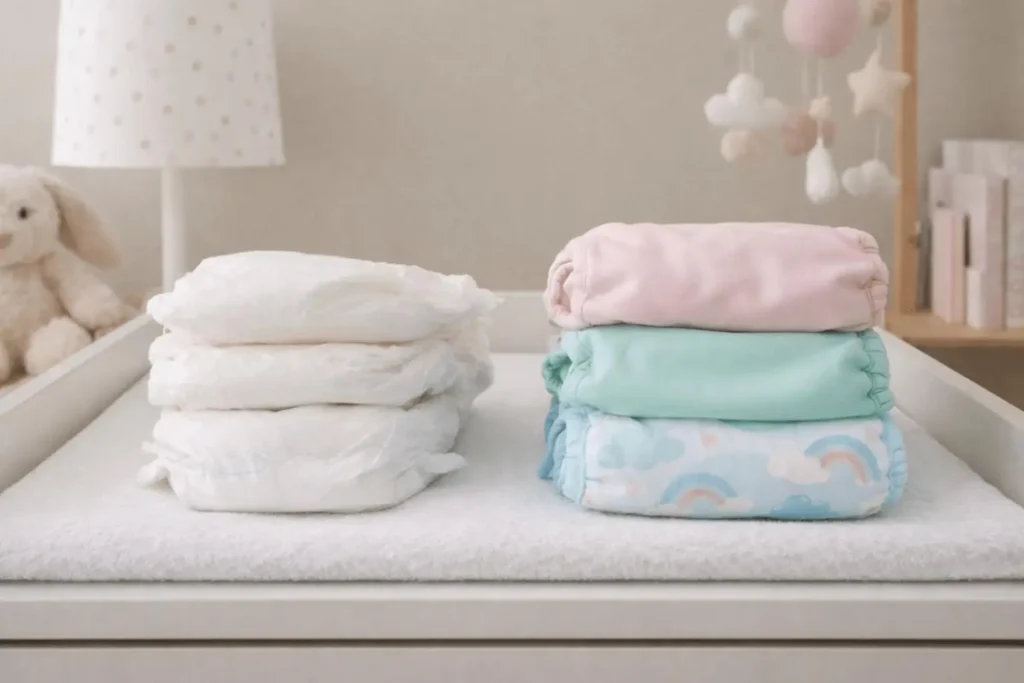
1. What Is the Difference Between Disposable and Cloth Diapers?
The main difference is that disposable diapers are designed for single use, whereas reusable cloth diapers are designed to be washed and used again.
Disposable diapers
Disposable diapers are generally made from several layers of absorbent materials, including cellulose fibres and absorbent polymers, along with outer layers designed to help prevent leakage. They are available in different sizes and styles to suit babies at different stages of growth.
Parents typically use disposable diapers because they are convenient to change, easy to carry and do not require washing after use.
Reusable cloth diapers
Reusable cloth diapers are made from washable fabrics and may have absorbent inserts, adjustable fasteners and waterproof outer layers. Some resemble traditional cotton nappies, while modern versions may use fitted designs or pocket systems.
Cloth diapers need to be changed, cleaned, dried and stored appropriately before reuse. Their absorbency and ease of use depend on the materials, design and number of inserts used.
Traditional cloth nappies versus modern reusable diapers
Traditional cotton nappies are usually simple pieces of fabric folded and secured around the baby. Modern reusable diapers may have adjustable snaps, elasticated leg openings, absorbent inserts and waterproof covers.
Modern designs can be more convenient, but they may also cost more initially. Parents should consider the washing instructions, fit, absorbency and availability of replacement inserts before buying a set.
2. Disposable Diapers: Pros and Cons
Disposable diapers are a common choice for families who want a convenient option for everyday use.
Advantages of disposable diapers
1. Convenient for everyday use
Disposable diapers are ready to use and can be discarded after changing. Parents do not need to wash and dry them before the next use.
2. Useful for travel and outings
They are easy to pack in a changing bag and can be convenient during car journeys, family visits and overnight stays away from home.
3. Wide availability
Disposable diapers are available in supermarkets, pharmacies, baby-product stores and online marketplaces in India. Parents can choose from different sizes, styles and price ranges.
4. Consistent product design
Many disposable diapers include absorbent cores, elasticated leg openings and fastening tabs. Some products also have wetness indicators or other features that help caregivers manage changes.
5. No routine diaper laundry
Used disposable diapers do not need to be washed. This can be helpful for families with limited laundry facilities or busy household schedules.
Disadvantages of disposable diapers
1. Recurring expense
Disposable diapers must be purchased regularly. The total cost depends on the brand, size, number used each day and the price paid per diaper.
2. Household waste
Used diapers contribute to solid waste. Their environmental impact also includes the materials and energy involved in manufacturing and transporting them.
3. Potential skin irritation
Prolonged contact with urine or stool, friction, moisture and sensitivity to particular products can contribute to diaper rash. Disposable diapers do not eliminate this risk, so regular changes and appropriate skin care remain important.
4. Storage and disposal requirements
Parents need to carry used diapers in a suitable disposal bag when a bin is unavailable and dispose of them responsibly. Disposable diapers should not be flushed down the toilet.
5. Fit varies between products
A diaper that is too tight, too loose or unsuitable for the baby’s current size may cause discomfort or leakage. Parents may need to try different sizes or designs to find a suitable fit.
3. Cloth Diapers: Pros and Cons
Reusable cloth diapers appeal to parents who prefer washable products and want to reduce their dependence on single-use items.
Advantages of cloth diapers
1. Reusable over multiple changes
Cloth diapers can be washed and reused according to the manufacturer’s instructions. This reduces the need to buy a new diaper for every change.
2. Potential long-term savings
Although the initial purchase may be more expensive, a suitable set of reusable diapers can serve a family for an extended period. Savings depend on the purchase price, number of diapers needed, laundry costs and how long the diapers remain usable.
3. Choice of materials and designs
Parents can choose from cotton and other fabrics, different insert types, adjustable fasteners and various diaper designs. It is important to check the material composition and care instructions rather than assuming every cloth diaper is equally absorbent.
4. Less reliance on single-use products
Because the diapers are reused, fewer individual diapers need to be purchased and discarded. The overall environmental benefit depends partly on washing, drying and the lifespan of the products.
5. Flexible use at home
Families with suitable laundry facilities may find cloth diapers practical for regular daytime use. Some parents use them for most changes, while others use them only at home.
Disadvantages of cloth diapers
1. Regular washing is necessary
Used cloth diapers must be cleaned thoroughly before reuse. This adds laundry to the household routine and requires an appropriate washing and drying process.
2. Higher initial investment
Parents usually need several diapers and, depending on the design, additional inserts or waterproof covers. A small number may be insufficient if washing and drying take a long time.
3. Additional water and energy use
Washing and drying reusable diapers consumes resources. The amount depends on the washing machine, wash settings, water supply, load size, detergent and drying method.
4. More preparation and organisation
Parents need to keep clean diapers available, manage used diapers safely and plan laundry regularly. Cloth diapers may be less convenient when travelling or when laundry facilities are limited.
5. Absorbency and fit require attention
Some designs need extra inserts, and different fabrics have different drying times and absorbency. Poor fit or incorrect use can lead to leakage.
6. Not every household has the same facilities
Families with limited water, space for drying or time for laundry may find reusable diapers difficult to manage consistently. It is reasonable to choose an option that fits the household’s circumstances.
4. Disposable vs Cloth Diapers: Cost Comparison in India
Cost is often one of the biggest considerations for parents. However, comparing only the price of one disposable diaper with the price of one cloth diaper can be misleading.
Disposable diapers involve repeated purchases, whereas cloth diapers require an initial investment followed by washing and maintenance expenses.
Initial purchase cost
Disposable diapers generally have a lower starting cost because parents can purchase a small pack and buy more when needed.
Reusable cloth diapers may require a larger initial purchase to provide enough clean diapers between washes. The number needed depends on the baby’s age, daily changes, washing frequency and drying time.
Ongoing costs over time
Disposable diaper costs can be estimated using the following formula:
Total disposable diaper cost = Number of diapers used × Average price per diaper
For example, if a family uses six disposable diapers per day, the estimated monthly use is:
6 diapers × 30 days = 180 diapers per month.
The monthly expense will depend on the actual price paid per diaper. If the baby needs more or fewer changes, the total will change accordingly.
For cloth diapers, consider the following expenses:
- Initial cost of the reusable diapers and inserts.
- Detergent and any additional laundry products required.
- Water and electricity used for washing.
- Replacement diapers or inserts, if needed.
- Any additional laundry or drying expenses.
Total cloth diaper cost = Initial purchase + Washing and maintenance costs + Replacement costs
Are reusable cloth diapers suitable for newborns?
To compare the two fairly, calculate the cost over the same period, such as six months, one year or the time until toilet training. The result will depend on the family’s actual usage and costs.
A practical cost comparison
| Cost factor | Disposable diapers | Reusable cloth diapers |
|---|---|---|
| Starting expense | Usually lower | Usually higher |
| Regular purchases | Required | Not required for every change |
| Washing expenses | No diaper laundry | Water, detergent and energy |
| Waste disposal | Required | Required for normal household waste, but fewer diapers are discarded |
| Long-term cost | Depends on daily usage and purchase price | Depends on initial investment, washing and product lifespan |
There is no single cost figure that applies to every Indian household. Prices differ by brand, size, retailer and location. For a realistic comparison, use current local prices and include all relevant expenses.
Money-saving tip: If you are considering cloth diapers, start with a small set before investing in a large collection. This allows you to assess fit, absorbency, washing requirements and convenience for your family.
5. Which Type Is Better for Your Baby’s Skin?
Both disposable and cloth diapers can be suitable for babies when used correctly. Neither type guarantees that a baby will never develop diaper rash.
Diaper rash can be associated with prolonged exposure to moisture, contact with urine or stool, friction, irritation and other skin conditions. The frequency of changing and the care provided are important considerations regardless of the diaper type.
To help care for your baby’s skin:
- Change wet or soiled diapers promptly.
- Clean the diaper area gently and allow the skin to dry before putting on a fresh diaper.
- Avoid diapers that fit too tightly or rub against the skin.
- Wash reusable diapers thoroughly using an appropriate method and the manufacturer’s instructions.
- Use a suitable barrier cream if needed and follow the product directions.
- Seek medical advice if the rash is severe, persistent, spreading or accompanied by other concerning symptoms.
Some parents find that one type works better for their baby than another. If irritation continues despite careful changing and cleaning, consult a healthcare professional rather than assuming the diaper material is the only cause.
For more practical guidance, visit our Diapering Essentials page and read our related guide, How to Choose the Right Diaper for Your Baby: A Parent’s Complete Guide.
6. Which Type Has a Lower Environmental Impact?
Environmental impact is more complicated than simply comparing the amount of waste produced.
Disposable diapers require raw materials, manufacturing, packaging and transportation. After use, they contribute to household waste and generally cannot be recycled through ordinary household recycling systems.
Reusable cloth diapers can reduce the number of single-use diapers discarded. However, their environmental impact includes the production of fabrics, repeated washing, detergent use and drying.
Several factors influence the comparison:
Washing practices: Washing full loads efficiently can help reduce the resources used per diaper.
Drying method: Air-drying where practical may reduce electricity use compared with frequent machine drying.
Product lifespan: Reusing cloth diapers for longer, while maintaining their condition and hygiene, can spread the initial manufacturing impact over more uses.
Water and energy availability: The environmental effects of washing vary depending on local conditions and household equipment.
Disposal arrangements: The impact of used disposable diapers depends partly on how municipal waste is collected and treated.
Neither option is automatically the most environmentally friendly in every situation. Reusable diapers can reduce single-use waste, but the overall comparison depends on how they are manufactured, washed, dried, reused and ultimately disposed of.
Environmental comparisons between disposable and reusable diapers depend on factors such as washing practices, energy use, the number of reuses and disposal methods. For further information, see the UN Environment Programme’s research on single-use nappies and their alternatives.
7. Can You Use Both Disposable and Cloth Diapers?
Yes. Families do not have to choose only one type.
A mixed approach allows parents to use reusable diapers when washing and changing are convenient and disposable diapers when practicality is more important.
For example:
- At home: Use cloth diapers if you have enough clean diapers and suitable laundry facilities.
- During travel: Disposable diapers may be easier to carry and manage.
- At childcare: Check which diaper types the childcare provider accepts and can manage hygienically.
- During overnight use: Choose a suitable product based on its intended use, absorbency and the baby’s needs. Change soiled diapers promptly.
- When laundry is delayed: Keep a suitable supply of disposable diapers available if needed.
If you use both types, keep the baby’s changing routine consistent and follow the care instructions for each product. The goal is to find a practical routine that supports your baby’s comfort and your family’s daily life.
8. Frequently Asked Questions
Are cloth diapers cheaper than disposable diapers?
They can be cheaper over time, but savings are not guaranteed. The result depends on the initial purchase price, number of diapers required, washing costs, replacement needs and how long the diapers are reused.
Do disposable diapers cause more diaper rash?
Not necessarily. Diaper rash can develop with either type. Frequent changes, gentle cleaning, suitable fit and appropriate skin care are important regardless of the diaper used.
How often should cloth diapers be changed?
Check diapers regularly and change them promptly when wet or soiled. The interval depends on the baby’s age, the diaper’s absorbency and whether the baby has passed stool. Follow the manufacturer’s instructions and your healthcare professional’s advice where relevant.
Explore our Diapering Essentials page for more information about diapering products, and read our complete guide to choosing the right diaper for additional practical advice.
Some reusable diapers are designed specifically for newborns. Check the recommended weight range, fit around the legs and waist, absorbency and washing instructions before buying.
Which diaper type is more convenient for travelling?
Disposable diapers are often more convenient for travel because they do not need to be washed before disposal. Reusable diapers can also be used when parents have a suitable way to store used diapers and wash them after returning.
Are cloth diapers better for the environment?
Reusable diapers can reduce single-use waste, but their overall environmental impact depends on manufacturing, washing, drying, reuse and disposal. The most suitable choice depends on both household practices and local conditions.
Can I switch between disposable and cloth diapers?
Yes. Many families combine the two options. You can use cloth diapers at home and disposables when travelling or when laundry facilities are unavailable, provided each product is used according to its instructions.
9. Final Thoughts: Choosing the Right Diaper for Your Family
Disposable and cloth diapers each have advantages and limitations. Disposable diapers offer convenience and avoid the need for regular diaper laundry, while reusable cloth diapers provide multiple uses and may offer long-term savings under suitable conditions.
Before making a decision, consider your budget, laundry facilities, daily schedule, travel requirements and your baby’s comfort. You may prefer one type or find that a combination works best.
The most important considerations are keeping your baby clean and comfortable, changing diapers promptly, maintaining good hygiene and choosing products that fit properly.
Disclaimer: This article is for general informational purposes only and is not a substitute for professional medical advice. Consult your baby’s healthcare professional if you have concerns about diaper rash, skin irritation or other health issues.
Affiliate disclosure: Some links on this website may be affiliate links. If you purchase through these links, we may earn a commission at no additional cost to you. We aim to recommend and discuss products transparently so that parents can make informed decisions.